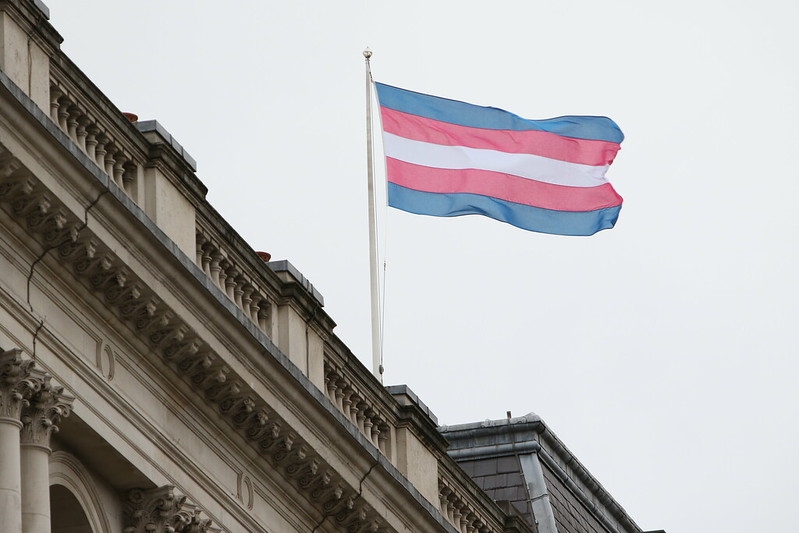
On April 16, 2025, the five UK Supreme Court judges unanimously ruled that, under the Equality Act 2010, the term “woman” refers to biological sex, and that holding a Gender Recognition Certificate does not alter a person’s sex for the purposes of the Act.
While the decision itself is not surprising, given the current political climate and the growing hostility toward the trans community, what troubles me most is the complete absence of dissent. Not one of the five judges offered a differing opinion—a courageous voice that could have provided some solace or acknowledgment to those most affected, even in defeat.
History has a way of repeating itself. In 1993, the Supreme Court of Canada heard a similar case: Mossop. In that instance, the Court ruled that the federal human rights legislation had not yet been amended to prohibit discrimination based on sexual orientation. As a result, Brian Mossop, a gay man, was denied paid bereavement leave to attend the funeral of his partner’s father, since their relationship was not recognized under the legal definition of “family status.”
Yet unlike the current ruling, three of the nine justices dissented. Among them was Justice Claire L’Heureux-Dubé, who penned a landmark dissent. In her opinion, she called on evolving social values to expand the legal definition of “family,” and her words continue to resonate and inspire to this day. Her dissent became a beacon—a reminder that even in loss, recognition and dignity matter.
On the eve of her retirement in 2002, when reporters asked Justice Claire L’Heureux-Dubé which judgment she was most proud of, Mossop topped the list.
Canada (A.G.) v. Mossop (1993)
L’Heureux-Dubé J. (dissenting):
“…Those who support a formalistic or more restrictive meaning for the term family point out that there is a dominant conception of family that has been traditionally enforced by laws and social custom. The form taken by this dominant conception is commonly referred to as the traditional family. It is widely understood that the traditional family is one composed of a married man and woman and their children (see Bruce Ryder, “Equality Rights and Sexual Orientation: Confronting Heterosexual Family Privilege” (1990), 9 Can. J. Fam. L. 39).
…
While it is arguable that the “traditional family” has an ideological stronghold, it is clear that a large number of Canadians do not live within traditional families. One cannot ignore the fact that, between 1970 and 1987, the divorce rate in Canada rose from 18.6 to 43.1 percent (Marriage and Conjugal Life in Canada: Current Demographic Analysis, by Jean Dumas and Yves Péron (1992), at p. 55).
The Statistics Canada 1990 Family and Friends survey indicated that half of divorcees aged 30‑39 and more than one‑third of those aged 40‑49 were living common‑law (Marriage and Conjugal Life in Canada, supra, at p. 50). Many children do not live in nuclear families. For example, in the United States in 1982, it was reported that 25 percent of children under the age of 18 did not live with both biological parents (Bureau of the Census, U.S. Dep’t. of Commerce, Current Population Reports, Special Studies Series P‑20, No. 380, Marital Status and Living Arrangements: March 1982, at 5, Table F (1983), cited in Bartlett, “Rethinking Parenthood as an Exclusive Status: The Need for Legal Alternatives When the Premise of the Nuclear Family Has Failed” (1984), 70 Va. L. Rev. 879, at pp. 880‑81).
Single‑parent families, especially mother‑led, are prevalent; an increasing number of parents never marry; divorce is common, as is remarriage; significant numbers of families are comprised of a husband and wife with no children at home; lesbians and homosexuals establish long‑term and committed relationships, and many are involved in raising and nurturing children (M. Mendola, The Mendola Report: A New Look at Gay Couples (1980); Phyllis Chesler, Mothers on Trial: The Battle for Children and Custody (1986)).
…
It was also argued by the intervener Focus on the Family that the traditional family provides the most favourable environment for raising children. Many people in society are still influenced by myth and stereotype concerning the ability of same‑sex couples to raise and nurture the children of one or the other. Children raised by lesbians and homosexual men, according to Susan Golombok, are not necessarily different from children raised by heterosexuals (S. Golombok, A. Spencer and M. Rutter, “Children in Lesbian and Single‑Parent Households: Psychosexual and Psychiatric Appraisal” (1983), 24 J. Child Psychol. Psychiat. 551; comments in A. Sage, “Can gay couples be good parents”, The Independent on Sunday, March 10, 1991; Gregory M. Herek, “Myths About Sexual Orientation: A Lawyer’s Guide to Social Science Research” (1991), 1 Law & Sexuality 133). What is important is that children be nurtured. The critical factor is not the family form, nor the presence of mixed sex role models, but the provision of a loving and nurturing environment. From this perspective, the ideal family is one which meets the needs of its members, and best attempts to realize the values that lie at the base of family.
…
Given the range of human preferences and possibilities, it is not unreasonable to conclude that families may take many forms. It is important to recognize that there are differences which separate as well as commonalities which bind. The differences should not be ignored, but neither should they be used to de‑legitimize those families that are thought to be different, and as Audre Lorde puts it in “Age, Race, Class, and Sex: Women Redefining Difference” in Sister Outsider (1984) 114, at p. 122:
. . . we must recognize differences among [people] who are our equals, neither inferior nor superior, and devise ways to use each others’ difference to enrich our visions and our joint struggles.
…
In light of all this, it is interesting to note that, in some ways, the debate about family presents society with a false choice. It is possible to be pro‑family without rejecting less traditional family forms. It is not anti‑family to support protection for non‑traditional families. The traditional family is not the only family form, and non‑traditional family forms may equally advance true family values.
…
Additional Reference:
Backhouse, Constance. Two Firsts: Bertha Wilson and Claire L’Heureux-Dubé at the Supreme Court of Canada. Second Story Press, 2019.
 Amber Ye
Leave a comment