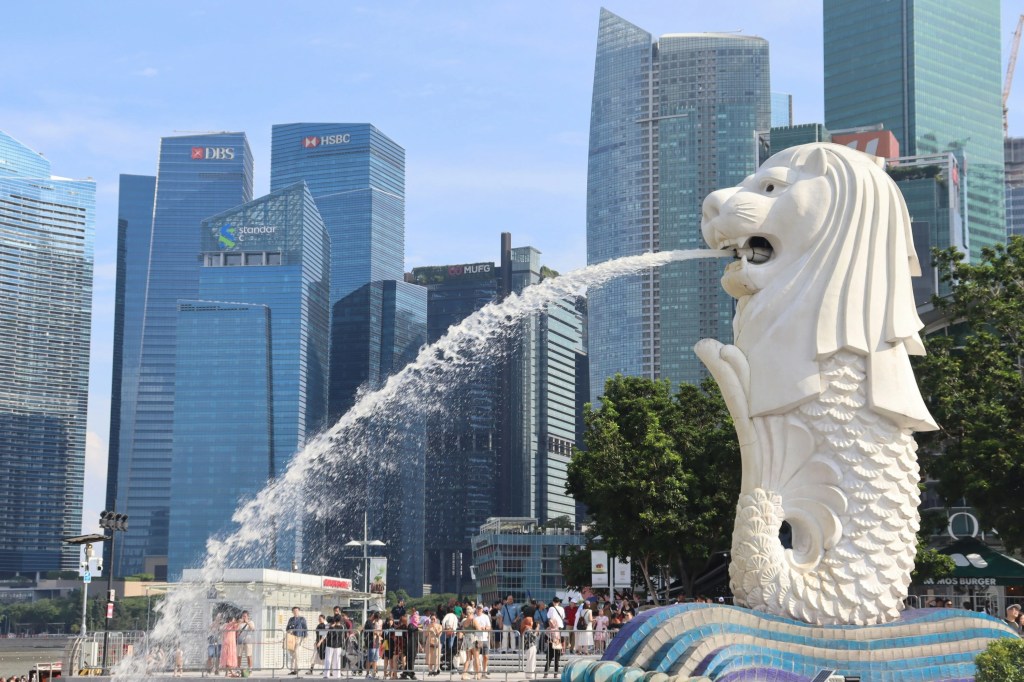
In the early 1990s, members of my extended family briefly passed through a particular corner of Southeast Asia—Singapore. Back then, it was efficient but modest. Today, it is, in many rankings, the world’s most advanced country: wealthier per capita than the United States and cleaner than Zurich.
It took Singapore less than thirty years to go from a dutiful outpost of colonial trade to a high-functioning capitalist techno-utopia. The people behind this transformation—Singaporeans—are not a monolith, though one might easily mistake the nation’s clean streets and quietly humming escalators as evidence of monoculture. In reality, the country is a compact mosaic: roughly 70% Chinese, with Malays, Indians, and others composing the rest. It is a demographic structure that curiously echoes the multicultural makeup of countries like Canada or the United States.
Recently, I had a long and unexpectedly revealing conversation with a second-generation Singaporean. He spoke about the country’s success with quiet pride, but also with a hint of something else. A kind of unspoken vigilance.
“We don’t talk about this openly,” he said, almost whispering, “but there’s an anxiety. About identity. About culture. About whether the thing we’ve built can hold.”
He was referring, somewhat obliquely, to what he described as the delicate balance of Singapore’s multiracial society—particularly, a growing awareness among some Singaporean Chinese of the natural demographic rise of non-Chinese populations, notably Malays and Indians. While these groups have long been part of the national fabric, my friend expressed a subtle fear: that the preservation of what he calls “Chinese virtues”—by which he means things like meritocracy, filial piety, pragmatism, social harmony—could be challenged if identity politics, especially along religious or ethnic lines, ever took root.
I asked him whether he thought this was a real threat, or a manufactured anxiety—an echo, perhaps, of what we’ve come to recognize in the United States as the MAGA syndrome: a kind of cultural nostalgia laced with demographic insecurity. He paused before replying. “It’s not that I think anyone wants division. It’s that we’re afraid of what happens if we start organizing around it.”
Indeed, Singapore has long outlawed identity politics in formal settings. This year, ahead of its general election, both the former Prime Minister Lee Hsien Loong and his successor Lawrence Wong held press conferences emphasizing that race and religion must remain firmly outside political discourse.
In the West, this approach might seem to be another piece of evidence, critics might say, of Singapore’s carefully ironed authoritarianism. But in Singapore, it’s regarded less as a suppression of liberty and more as a practical engineering decision. The country’s founding father, Lee Kuan Yew, once said that multiracialism was not natural, but necessary—and therefore had to be “deliberately nurtured.”
By contrast, one could look at North American politics and see a kaleidoscope of representation: Sikh MPs in Ottawa, Muslim mayors in London, Black and Hispanic lawmakers rising in the U.S. Congress. On the surface, it’s inspiring—a democratic theater of inclusion. But for my friend, and perhaps for others like him, there is also something unnerving about the way identity in Western politics often becomes the main act rather than a supporting character.
“If we go down that road,” he said carefully, “will voters only vote for someone who looks like them? Talks like them? Prays like them? And if that happens, what happens to merit? What happens to unity?”
These questions are not entirely different from those posed—however crudely—by segments of the American electorate fearful of losing their cultural primacy. The difference is in tone and policy. Where MAGA burns its anxieties into baseball caps and barbed slogans, Singapore tucks its fears into bureaucratic restraint and quiet paternalism. But the core question—who gets to define the national character?—is not so different.
Of course, it’s easy to judge when standing in one pair of shoes. But try the other foot. Imagine a society small enough to fall apart if its seams tear even slightly, and diverse enough that a little populism can mean a lot of trouble. Perhaps the Singaporean approach—flawed though it is—makes a certain kind of sense.
I left the conversation feeling a little unsettled. And a little more understanding. Sometimes, you put in the other shoe—not because it fits, but because it reminds you how many ways there are to walk toward the future.
 Amber Ye
Leave a comment